
-
Medal of Honor (MOH)
History
General George Washington had created the Badge of Military Merit on 7 August 1792 but it had fallen into disuse after the Revolutionary War. Decorations, as such, were still too closely related to European royalty to be of concern to the American people. However, the fierce fighting and deeds of valor during the Civil War brought into focus the realization that such valor must be recognized. Legislation was introduced in the Senate on 17 February 1862, which authorized the medal for the Army and followed the pattern of a similar award approved for Naval personnel in December 1861. The Resolution provided that: "The President of the United States be, and he is hereby, authorized to cause two thousand "medals of honor" to be prepared with suitable emblematic devices, and to direct that the same be presented, in the name of Congress, to such noncommissioned officers and privates as shall most distinguish themselves by their gallantry in action, and other soldier-like qualities during the present insurrection, and the sum of ten thousand dollars be, and the same is hereby appropriated out of any money in the Treasury not otherwise appropriated, for the purpose of carrying this resolution into effect." The Medal of Honor has had many designs throughout American history. On 23 April 1904, Congress authorized a new design of the medal. The design adopted at that time was designed by Major General George L. Gillespie and is the one currently in use. The medal was worn either suspended from the neck or pinned over the left breast in precedence to other military decorations.
Prerequisites
The Medal of Honor will only be awarded in the 3rd Infantry Division to honor an overwhelming personal sacrifice of a Soldier in a real life situation.
-
Distinguished Service Cross (DSC)
History
The Distinguished Service Cross was established by President Woodrow Wilson on January 2, 1918. General Pershing, Commander-in-Chief of the Expeditionary Forces in France, had recommended that recognition other than the Medal of Honor, be authorized for the Armed Forces of the United States for service rendered, in like manner, to that awarded by the European Armies. The request for establishment of the medal was forwarded from the Secretary of War to the President in a letter dated December 28, 1917. The Act of Congress establishing this award (193-65th Congress) dated July 9, 1918 is contained in Title 10 United States Code (USC) 3742. The establishment of the Distinguished Service Cross was promulgated in War Department General Order No. 6, dated January 12, 1918.
Prerequisites
The Distinguished Service Cross (DSC) is the second highest military decoration that can be awarded to a member of the United States Army (and previously, the United States Army Air Forces). It is awarded for extraordinary heroism:
- While engaged in action against an enemy of the United States;
- While engaged in military operations involving conflict with an opposing foreign force; or
- While serving with friendly foreign forces engaged in an armed conflict against an opposing armed force in which the United States is not a belligerent party.
Actions that merit the Distinguished Service Cross must be of such a high degree that they are above those required for all other U.S. combat decorations but do not merit award of the Medal of Honor. The Distinguished Service Cross is equivalent to the Navy Cross (Navy and Marine Corps, and Coast Guard when operating under the authority of the Department of the Navy) and the Air Force Cross (Air Force).
-
Silver Star (SS)
History
The Citation Star was established as a result of an Act of Congress on July 9, 1918 (65th Congress, Sess II, Chapter 143, page 873) and was promulgated in War Department Bulletin No. 43 dated 1918. It was retroactive to include those cited for gallantry in action in previous campaigns back to the Spanish-American War. Per letter from General Jervey, Office of the Chief of Staff, dated February 26, 1926, is quoted in part: The Secretary of War directs as follows - The following is the amended version of paragraph 187 of Army Regulation: "No more than one Medal of Honor or one Distinguished Service Cross or one Distinguished Service Medal shall be issued to any one person, but for each succeeding or act sufficient to justify the award of a Medal of Honor or Distinguished Service Cross or Distinguished Service Medal, respectively, a bronze oak leaf cluster, shall be issued in lieu thereof; and for each citation of an officer or enlisted man for gallantry in action, published in orders from headquarters of a force commanded by a general officer, not warranting the issue of a Medal of Honor, Distinguished Service Cross or Distinguished Service Medal, he shall wear a silver star, 3/16 inch in diameter, as prescribed in Uniform Regulations." Army Regulation 600-40, paragraph 48, September 27, 1921, specified that the Citation Star would be worn above the clasp, on the ribbon of the service medal for the campaign for service in which the citations were given. On July 19, 1932, the Secretary of War approved the Silver Star medal to replace the Citation Star. This design placed the Citation Star on a bronze pendant suspended from the ribbon design. The star was no longer attached to a service or campaign ribbon. Authorization for the Silver Star was placed into law by an Act of Congress for the Navy on August 7, 1942 and an Act of Congress for the Army on December 15, 1942. The primary reason for congressional authorization was the desire to award the medal to civilians as well as the Army. The current statutory authorization for the Silver Star Medal is Title 10, United States Code, Section 3746.
Prerequisites
The Silver Star is the third-highest military combat decoration that can be awarded to a member of the United States Armed Forces. It is awarded for gallantry in action:While engaged in action against an enemy of the United States; While engaged in military operations involving conflict with an opposing foreign force; or While serving with friendly foreign forces engaged in an armed conflict against an opposing armed force in which the United States is not a belligerent party. Actions that merit the Silver Star must be of such a high degree that they are above those required for all other U.S. combat decorations but do not merit award of the Medal of Honor or a Service Cross (Distinguished Service Cross, the Navy Cross, or the Air Force Cross).
-
Legion of Merit (LOM)
History
The Legion of Merit is a decoration presented by the United States Armed Forces to members of the United States Military, as well as foreign military members and political figures, who have displayed exceptionally meritorious conduct in the performance of outstanding services and achievements. The performance must be of significant importance and far exceed what is expected by normal standards. This award is seventh in the order of precedence of all U.S. military awards and is worn after the Defense Superior Service Medal and before the Distinguished Flying Cross.
Prerequisites
The Legion of Merit is awarded to any person who, while serving in any capacity for the unit, distinguishes themselves over a long period of time that benefited the overall unit outside of a combat environment. This medal is awarded to those who's support and effort to the success of the unit greatly impacted its overall capabilities with actions outside of official operations and is considered a non-combat level award. This medal has no specific time requirement but can not be presented to individual events such as an Army Achievement Medal, Army Commendation Medal, or Meritorious Service Medal. The Legion of Merit may be awarded for meritorious achievement or meritorious service according to the following:
- Awards may be made to recognize single acts of merit or meritorious service. This award is considered the highest Non-Combat award available in the unit, and thus will be awarded to individuals for non-combat related actions.
- Award may be made to each member of the Armed Forces of the United States who has been cited in orders or awarded a certificate for exemplary conduct in actions that greatly benefited the unit. This includes, but is not limited too, an action that stands the unit out compared to other units, actions that would benefit the unit greatly over a long period, actions that are considered above and beyond in a non-combat situation.
- This Award is not a DMOS specific award, but instead is a non-combat specific award. Thus this award can not be submitted for any in-operation actions within the unit.
- This award can only be recommended by Company Leadership or above for individuals. No individuals below Company Leadership may recommend this award for another Soldier.
-
Distinguished Flying Cross (DFC)
History
Awarded for heroism or extraordinary achievement while participating in an aerial flight.
Prerequisites
Recipient must distinguish themselves in support of operations by showing "great heroism or extraordinary action" in an aerial flight as Pilot or Crew Chief. May be awarded for a single action or series of actions that go above and beyond the normal duties of an aviator.
-
Bronze Star (BSM)
History
General George C. Marshall, in a memorandum to President Roosevelt dated February 3, 1944, wrote: "The fact that the ground troops, Infantry in particular, lead miserable lives of extreme discomfort and are the ones who must close in personal combat with the enemy, makes the maintenance of their morale of great importance. The award of the Air Medal have had an adverse reaction on the ground troops, particularly the Infantry Riflemen who are now suffering the heaviest losses, air or ground, in the Army, and enduring the greatest hardships." The Air Medal had been adopted two years earlier to raise airmen’s morale. President Roosevelt authorized the Bronze Star Medal by Executive Order 9419 dated 4 February 1944, retroactive to 7 December 1941. This authorization was announced in War Department Bulletin No. 3, dated 10 February 1944. The Executive Order was amended by President Kennedy, per Executive Order 11046 dated 24 August 1962, to expand the authorization to include those serving with friendly forces. As a result of a study conducted in 1947, the policy was implemented that authorized the retroactive award of the Bronze Star Medal to soldiers who had received the Combat Infantryman Badge or the Combat Medical Badge during World War II. The basis for doing this was that the badges were awarded only to soldiers who had borne the hardships which resulted in General Marshall’s support of the Bronze Star Medal. Both badges required a recommendation by the commander and a citation in orders.
Prerequisites
The Bronze Star medal is awarded to any person who, while serving in any capacity for the unit, distinguishes themselves over a long period of time that benefited the overall unit. This medal is awarded to those who's support and effort to the success of the unit greatly impacted its overall capabilities. This medal has no specific time requirement but can not be presented to individual events such as an Army Achievement Medal, Army Commendation Medal, Meritorious Service Medal, or Purple Heart.
The Bronze Star Medal may be awarded for meritorious achievement or meritorious service according to the following:
- Awards may be made to recognize single acts of merit or meritorious service. The lesser degree than that required for the award of the Legion of Merit must nevertheless have been meritorious and accomplished with distinction.
- Award may be made to each member of the Armed Forces of the United States who has been cited in orders or awarded a certificate for exemplary conduct in ground combat against an armed enemy. For this purpose, an award of the Combat Infantryman Badge or Combat Medical Badge is considered as a citation in orders.
- Can also be utilized for end of deployment attendance awards: soldiers that attend 100% of all named missions and shaping operations will be eligible for a Bronze Star.
Tiers
 Standard
 C Device
 V Device
-
Soldier's Medal (SM)
History
The Soldier's Medal is awarded to any person while serving in any capacity with the Army of the United States distinguished himself or herself by heroism not involving actual conflict with an enemy.
Prerequisites
Awarded to soldiers selected as Soldier of the Quarter.
-
Purple Heart (PH)
History
The original Purple Heart, designated as the Badge of Military Merit, was established by General George Washington by order from his headquarters at Newburgh, New York, August 7, 1782. The writings of General Washington quoted in part: "The General ever desirous to cherish a virtuous ambition in his soldiers, as well as to foster and encourage every species of Military Merit, directs that whenever any singularly meritorious action is performed, the author of it shall be permitted to wear on his facings over the left breast, the figure of a heart in purple cloth or silk, edged with narrow lace or binding. Not only instances of unusual gallantry, but also of extraordinary fidelity and essential service in any way shall meet with a due reward". So far as the known surviving records show, this honor badge was granted to only three men, all of them noncommissioned officers: Sergeant Daniel Bissell of the 2d Connecticut Regiment of the Continental Line; Sergeant William Brown of the 5th Connecticut Regiment of the Continental Line, and Sergeant Elijah Churchill of the 2d Continental Dragoons, which was also a Connecticut Regiment. The original Purple Heart depicted on the first page is a copy of the badge awarded to Sergeant Elijah Churchill and is now owned by the New Windsor Cantonment, National Temple Hill Association, PO Box 525, Vails Gate, NY 12584. The only other known original badge is the badge awarded to Sergeant William Brown and is in the possession of The Society of the Cincinnati, New Hampshire Branch but differs in design by not having any lettering embroidered on the heart and the leaves are at the top only with a larger spray of leaves at the base. Subsequent to the Revolution, the Order of the Purple Heart had fallen into disuse and no further awards were made. By Order of the President of the United States, the Purple Heart was revived on the 200th Anniversary of George Washington's birth, out of respect to his memory and military achievements, by War Department General Orders No. 3, dated 22 February 1932. The criteria was announced in War Department Circular dated 22 February 1932 and authorized award to soldiers, upon their request, who had been awarded the Meritorious Service Citation Certificate or were authorized to wear wound chevrons subsequent to 5 April 1917. During the early period of World War II (7 Dec 41 to 22 Sep 43), the Purple Heart was awarded both for wounds received in action against the enemy and for meritorious performance of duty. With the establishment of the Legion of Merit, by an Act of Congress, the practice of awarding the Purple Heart for meritorious service was discontinued. By Executive Order 9277, dated 3 December 1942, the decoration was extended to be applicable to all services and the order required that regulations of the Services be uniform in application as far as practicable. This executive order also authorized award only for wounds received. Executive Order 10409, dated 12 February 1952, revised authorizations to include the Service Secretaries subject to approval of the Secretary of Defense. Executive Order 11016, dated 25 April 1962, included provisions for posthumous award of the Purple Heart. Executive Order 12464, dated 23 February 1984, authorized award of the Purple Heart as a result of terrorist attacks or while serving as part of a peacekeeping force subsequent to 28 March 1973. The Senate approved an amendment to the 1985 Defense Authorization Bill on 13 June 1985, which changed the precedent from immediately above the Good Conduct Medal to immediately above the Meritorious Service Medals. Public Law 99-145 authorized the award for wounds received as a result of "friendly fire". Public Law 104-106 expanded the eligibility date, authorizing award of the Purple Heart to a former prisoner of war who was wounded before 25 April 1962. The National Defense Authorization Act for Fiscal Year1998 (Public Law 105-85) changed the criteria to delete authorization for award of the Purple Heart Medal to any civilian national of the United States while serving under competent authority in any capacity with the Armed Forces. This change was effective 18 May 1998.
Prerequisites
The Purple Heart shall be awarded to Soldiers, while wounded and fulfilling a Leadership role at the time, achieve outstanding and distinguishing acts of Valor that led to the success of a mission.
-
Meritorious Service Medal (MSM)

History
At Tri-Department Awards Conference, 5-6 February 1968, there was a discussion on the need for a third meritorious award to provide appropriate recognition for noncombat achievement or service comparable to the Bronze Star Medal for combat achievement or service. It was felt that the Legion of Merit’s prestige was slipping because it was being used with increasing frequency to reward service below Legion of Merit standard, but higher than that required for the Commendation Medal. A proposed executive order was prepared in April 1968 and forwarded for approval to the Military Departments. An ad hoc committee was formed by the Secretary of Defense (M&RA) to select a name. On 8 November 1968, the committee unanimously approved the name "Meritorious Service Medal". President Johnson established the Meritorious Service Medal per Executive Order No. 11448 dated 16 January 1969. The Executive Order was amended by President Reagan per Executive Order 12312, dated 2 July 1981, to authorize award to members of the armed forces of friendly foreign nations. The decoration was designed by Mr. Jay Morris, The Institute of Heraldry, and the design was approved by the committee on 20 March 1969. The ribbon design purposely follows the colors used for the Legion of Merit to reflect the parallel between the two medals. The eagle, symbol of the nation, stands on laurel branches denoting achievement. The star is used to represent the military service and the rays emanating therefrom denote the constant efforts of individuals to achieve through excellent and meritorious service.
Prerequisites
The Meritorious Service Medal shall be awarded to Soldiers who distinguished themselves, both in and outside of Combat Operations, that support the success of a Company. This medal can also be awarded to Soldiers who conduct distinguishable achievements warranting recognition higher then an Army Commendation Medal in individual situations or over a period of time.
Can also be utilized for end of deployment attendance awards: soldiers that attend 100% of named missions will be eligible for a Meritorious Service Medal.
-
Air Medal (AM)
History
The Air Medal is awarded to anyone who distinguishes himself or herself by meritorious achievement while participating in aerial flight.
Prerequisites
Awarded for performing outstanding flight-related duties while in a combat zone. Must be assigned an MOS such as Detachment Commander, Pilot, or Crew (W1-W5). May be awarded with a Combat "V" for Valor for an act of meritorious action or bravery against an armed enemy less than the criteria for the Distinguished Flying Cross.
Tiers
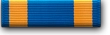 Standard
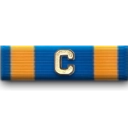 C Device
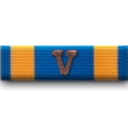 V Device
-
Defense Distinguished Service Medal (DDSM)

History
The Defense Distinguished Service Medal (DDSM) shall only be awarded to officers of the Armed Forces of the United States whose exceptional performance of duty and contributions to national security or defense have been at the highest levels. Such officers have direct and ultimate responsibility for a major activity or program that significantly influences the policies of the U.S. Government. Only under the most unusual circumstances will the DDSM be awarded as an impact award for outstanding TDY achievement. The DDSM is specifically intended to recognize exceptionally distinguished service and to honor an individual's accomplishments over a sustained period.
Prerequisites
The Defense Distinguished Service Medal (DDSM) shall be awarded only to officers or Senior NCO's who have rendered distinguished meritorious service in a position of enormous responsibility. The DDSM is specifically intended to recognize exceptionally distinguished service, and to honor an individual's accomplishments over a sustained period of 10 years in time of service in one tour.
-
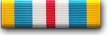
Defense Superior Service Medal (DSSM)
History
The Defense Superior Service Medal (DSSM) is the second highest award bestowed by the Department of Defense. Awarded in the name of the Secretary of Defense, the award is presented to members of the U.S. Armed Forces who perform "superior meritorious service in a position of significant responsibility." Created on February 6th, 1976 by President Gerald R. Ford's Executive Order 11904, it is typically awarded only to senior officers of the Flag and General Officer grade.
Prerequisites
The Defense Superior Service Medal (DSSM) shall be awarded only to officers or NCO's who have rendered superior service in a position of enormous responsibility. The DSSM is specifically intended to recognize exceptionally dedicated service, and to honor an individual's accomplishments over a sustained period of 5 years in time of service in one tour.
-
Joint Service Commendation Medal (JSCOM)
History
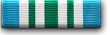
The Joint Service Commendation Medal was was created in 1963. This award is intended for senior service on a joint military staff and is senior in precedence to service-specific Commendation Medals. As such, it is worn above the service Commendation Medals on a military uniform. As a joint award, multiple awards are denoted with an oak leaf cluster regardless of service.
Prerequisites
The Joint Service Commendation Medal shall be awarded to soldiers for extraordinary achievement in performance of DMOS functions above that required for the Joint Service Achievment Medal.
-
Joint Service Achievement Medal (JSAM)
History
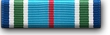
The Joint Service Achievement Medal was designed by Jay Morris and sculpted by Donald Borja, both of the Army's Institute of Heraldry. The bronze medal is 1-7/16 inches in overall diameter, consisting of a star of twelve points. An eagle holding three arrows is superimposed in the center. The shape of the medal was chosen to make it distinctive from all other decorations, and the eagle was taken from the Seal of the Secretary of Defense, under whose authority the medal is awarded. On the reverse, there is a circle composed of the following inscription (in raised letters): JOINT SERVICE (which comprises the upper portion of the circle) ACHIEVEMENT AWARD (which comprises the lower portion of the circle). The space in the center of the circle is left blank for inscribing the recipient's name. The ribbon consists of a center stripe of red flanked on either side by stripes of light blue, white, green, white, and blue.
Prerequisites
The Joint Service Achievement Medal shall be awarded to soldiers for significant achievement in performance of DMOS functions below that required for the Joint Service Commendation Medal.
-
Armed Forces Expeditionary Medal (AFEM)
History
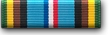
During the late 1950's, it became apparent that a medal was needed to recognize the services of the Armed Forces who participated in the increased involvement of the American military in peacekeeping activities. As a result, President Kennedy established the Armed Forces Expeditionary Medal, per Executive Order 10977, dated 4 December 1961, for operations on or after 1 July 1958. In a memorandum dated 20 December 1961, the Deputy Assistant Secretary of Defense requested that The Institute of Heraldry submit proposed designs as soon as possible. Proposed designs were submitted on 25 January 1962 and a design, created by Mr. Jay Morris, was tentatively selected. The design was submitted to the Commission of Fine Arts for comments prior to approval by the Deputy Secretary of Defense on 24 April 1962. The selected design uses the eagle to represent the strength of our Armed Forces, and the sword, loose in its scabbard, denotes the readiness to serve wherever needed, as further suggested by the compass rose. At the present time, JCS has designated 22 operations for which the Armed Forces Expeditionary Medal may be awarded. A bronze service star is worn to denote second and subsequent awards of the Armed Forces Expeditionary Medal. Each Service may authorize the use of campaign streamers for operations in the designated areas. The Army has authorized campaign credit and display of streamers for three areas: Grenada, Panama and the Dominican Republic. The Air Force has authorized display of streamers for all 22 operations. The Navy authorizes display of three silver stars and four bronze stars on the streamer representing 19 operations.
Prerequisites
The Armed Forces Expeditionary Medal shall be awarded to soldiers who have deployed to a theater other than being state-side for training for at least 12 months. This includes official operations, FTX's or CTX's.
-
Global War on Terrorism Expeditionary Medal (GWOTE-M)
History
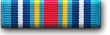
On 20 September 2002, the Office of the Assistant Secretary of Defense, requested the Institute provide suggested designs. This was accomplished and the design was selected on 7 January 2003. Executive Order 13289, dated 12 March 2003, signed by President Bush, established this medal. The Office of The Under Secretary of Defense approved additions to the designated geographical areas of eligibility on 21 March 2005.
Prerequisites
The Global War on Terrorism Expeditionary Medal shall be awarded to any soldier who has deployed with the unit to a region controlled by enemy forces and has assisted in the search for and removal of the enemy and/or assisted with missions regarding enemy plots in no less than six official operations.
-
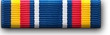
Global War on Terrorism Service Medal (GWOTS-M)
History
On 20 September 2002, the Office of the Assistant Secretary of Defense, requested the Institute provide suggested designs. This was accomplished and the design was selected on 7 January 2003. Executive Order 13289, dated 12 March 2003, signed by President Bush, established this medal.
Prerequisites
The Global War on Terrorism Service Medal shall be awarded to any soldier who has been deployed to fight in support of the 3rd Infantry Division Realism Unit's mission. While being deployed, the soldier must complete his/her duties to the best of their abilities in no less than three official operations, also always awarded with the 3rd Infantry Division Combat Patch.
-
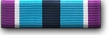
Humanitarian Service Medal (HSM)
History
The Humanitarian Service Medal was established by President Ford per Executive Order 11965, dated 19 January 1977. The order provided for award for participation in a military operation of a humanitarian nature subsequent to 1 April 1975. The policy and award criteria for the Humanitarian Service Medal was established by Department of Defense Directive 1348.25, dated 23 June 1977. Proposed medals were submitted to the Office of the Secretary of Defense (OSD) for approval 18 April 1977 and the selected design was approved by OSD on 10 May 1977. The design by Mr. Jay Morris, The Institute of Heraldry, uses the outstretched hand with palm up as the international symbol for aid and assistance. On the reverse, the oak sprig is symbolic of strength imparted through a selfless mission to aid mankind. The color purple in the ribbon stands for self-sacrifice, white for regeneration and blue for universal friendship. In addition, the two shades of blue are the colors used in the flags of OSD.
Prerequisites
The Humanitarian Service Medal shall be awarded to members of the 3rd Infantry Division who distinguish themselves by meritorious direct participation in any significant online act or operation of a humanitarian nature approved by Command Staff. The medal is awarded for participation in areas of helping others with technical issues (such as web design, graphics, signatures and general computer problems) or morale support to fellow soldiers in times of need. Some examples can be: someone who buys a fellow unit member a game that cost $50 or more so that the soldier can participate in other unit fun events, buying someone new PC parts to replace broken ones so they can continue in the unit or helping someone financially in real life when they are going through rough times.
-
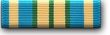
Military Outstanding Volunteer Service Medal (MOVSM)
History
The Military Outstanding Volunteer Service Medal (MOVSM) was established by Executive Order 12830, 9 January 1993. It may be awarded to members of the Armed Forces of the United States and their Reserve Components, who subsequent to 31 December 1992, perform outstanding volunteer community service of a sustained direct and consequential nature.
Prerequisites
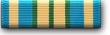
The Military Outstanding Volunteer Service Medal shall be awarded to any soldier who donates in excess of $50 in any calendar month. A "V" device is added for donations in excess of $100 in any calendar month.
Tiers
 Standard
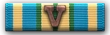 V Device
-
Armed Forces Service Medal (AFSM)
History
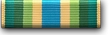
On 2 March 1995, the Office of the Assistant Secretary of Defense (Force Management Policy) (OASD-RMP) requested that The Institute of Heraldry prepare a medal and ribbon design for the proposed Armed Forces Service Medal. This medal was to be awarded to members of the Armed Forces who participated as members of units involved in military operations of significant numbers with no foreign armed opposition or the threat of imminent hostile action. This medal is intended to meet a void in the criteria between the Armed Forces Expeditionary Medal and the Humanitarian Service Medal. Proposed design was forwarded by OASD-FMP to the Services and the Joint Staff. Concurrence in the establishment of the medal from the Services and the Joint Staff was received and the proposal was forwarded to the Office of Budget and Management (OMB) for issuance of an Executive Order. The medal was authorized by Executive Order 12985, dated 11 January 1996.
Prerequisites
The Armed Forces Service Medal shall be awarded to soldiers of the 3rd Infantry Division that are assigned to non-combat positions (DMOS) in addition to their combat billet and serve with distinction for a period of six months or longer.
-
Day of Days Mission Service Ribbon
History
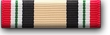
The Day of Days Mission was a 24 hour combat mission held on America's Army 2 on June 27th, 2007.
Prerequisites
The Day of Days Mission Service Ribbon shall be awarded to soldiers who served in the Day of Days mission on June 27th, 2007.
-
Operation Red Dawn Service Ribbon
History
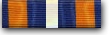
Operation Red Dawn Service was a 2 week combat deployment that began on December 30th, 2007.
Prerequisites
The Operation Red Dawn Service Ribbon shall be awarded to soldiers who served in Operation Red Dawn.
-
Operation Red Clover Service Ribbon
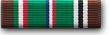
History
Operation Red Clover was a combat deployment on March 29th, 2008.
Prerequisites
The Operation Red Clover Service Ribbon shall be awarded to soldiers who served in Operation Red Clover.
-
Operation Red Hammer Service Ribbon
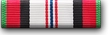
History
Operation Red Hammer was a combat deployment in America's Army 2 on May 24th, 2008.
Prerequisites
The Operation Red Hammer Service Ribbon shall be awarded to soldiers who served in Operation Red Hammer.
-
Operation Guardian Angel Service Ribbon
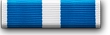
History
Operation Guardian Angel was a combat operation on America's Army 2 on August 25th, 2008.
Prerequisites
The Operation Guardian Angel Service Ribbon shall be awarded to soldiers who served in Operation Guardian Angel.
-
Operation Endurance Service Ribbon

History
Operation Endurance Service was a combat deployment in America's Army 2 on December 6th, 2008.
Prerequisites
The Operation Endurance Service Ribbon shall be awarded to soldiers who served in Operation Endurance.
-
Operation Raging Bull Service Ribbon

History
Operation Raging Bull was a combat deployment in America's Army 2 on March 14th, 2009.
Prerequisites
The Operation Raging Bull Service Ribbon shall be awarded to soldiers who served in Operation Raging Bull.
-
Operation Warhound Service Ribbon
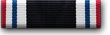
History
Operation Warhound was a combat deployment in Amercia's Army 2 on July 16th. 2009.
Prerequisites
The Operation Warhound Service Ribbon shall be awarded to soldiers who served in Operation Warhound.
-
Operation Desert Falcon Service Ribbon
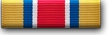
History
Operation Desert Falcon was a combat deployment in Amercia's Army 2 on December 14th, 2009.
Prerequisites
The Operation Desert Falcon Service Ribbon shall be awarded to soldiers who served in Operation Desert Falcon.
-
Operation Iron Badger Service Ribbon
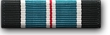
History
Operation Iron Badger was a combat deployment in Amercia's Army 2 on February 24th, 2010.
Prerequisites
The Operation Iron Badger Service Ribbon shall be awarded to soldiers who served in Operation Iron Badger.
-
Presidential Unit Citation (PUC)

History
The Distinguished Unit Citation was established as a result of Executive Order No. 9075, dated 26 February 1942. The Executive Order directed the Secretary of War to issue citations in the name of the President of the United States to Army units for outstanding performance of duty after 7 December 1941. The design submitted by the Office of the Quartermaster General was approved by the G1 on 30 May 1942. The Distinguished Unit Citation was redesignated the Presidential Unit Citation (Army) per DF, DCSPER, date 3 November 1966. The Presidential Unit Citation is the highest unit decoration which may be bestowed upon a U.S. Army unit.
Prerequisites
The Presidential Unit Citation shall be awarded to any unit of the 3rd Infantry Division for extraordinary heroism in action against an armed enemy by order of the commander.
- 04SEP2016 - Operation Bronze Fire - Soldiers who participated in eighteen (18) to twenty two (22) Combat missions
- 03JAN2021 - Operation Thin Ice - Soldiers who participated in twenty one (21) to twenty six (26) Combat missions
- 05DEC2021 - Operation Silver Guardian - Soldiers who participated in seventeen (17) to twenty one (21) Combat missions
- 04DEC2022 - Operation Blue Giant - Soldiers who participated in fifteen (15) to nineteen (19) Combat missions
- 04JAN2026 - Operation Egyptian Collapse - Soldiers who participated in fourteen (14) to eighteen (18) Combat missions
-
Valorous Unit Award (VUA)
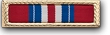
History
As a result of a request from the Commander, USMACV, to expand the scope of the Meritorious Unit Commendation to include acts of valor, a review of the unit awards program was conducted in 1965. The study concluded that a gap existed in the awards program. The Distinguished Unit Citation was awarded for gallantry in action for heroism that would warrant the Distinguished Service Cross to an individual. There was no lesser unit award for heroism. Based on the study, a recommendation was submitted to expand the scope of the Meritorious Unit Commendation to include acts of heroism. The recommendation was disapproved by the DCSPER and in a memorandum to the CSA, dated 7 January 1966, the DCSPER recommended a Valorous Unit Award be adopted to signify unit gallantry in combat to a degree equivalent to that required for award of a Silver Star to an individual. The recommendation with proposed design was approved by the Chief of Staff, Army, on 12 January 1966. The Valorous Unit Award is the second highest unit decoration which may be bestowed upon a U.S. Army unit.
Prerequisites
The Valorous Unit Award shall be awarded to any unit of the 3rd Infantry Division which displays extraordinary heroism in action against an armed enemy of the United States of America by order of the commander.
- 04SEP2016 - Operation Bronze Fire - Soldiers who participated in nine (9) to seventeen (17) Combat missions
- 04NOV2018 - Operation Freedom Sentinel - Soldiers who participated in a minimum of one (1) Combat mission out of forty-seven (47)
- 03JAN2021 - Operation Thin Ice - Soldiers who participated in eleven (11) to twenty (20) Combat missions
- 05DEC2021 - Operation Silver Guardian - Soldiers who participated in ten (10) to sixteen (16) Combat missions
- 04DEC2022 - Operation Blue Giant - Soldiers who participated in eight (8) to fourteen (14) Combat missions
- 04JAN2026 - Operation Egyptian Collapse - Soldiers who participated in seven (7) to thirteen (13) Combat missions
-
Army Superior Unit Award (ASUA)
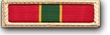
History
As part of the Army Cohesion and Stability Study (ARCOST) of 1980, a proposal to adopt the Army Superior Unit Award was forwarded to Major Army Commands (MACOM) for comment on 18 March 1981. This recommendation was based on the fact that present Army unit awards were for combat service only. While all MACOM\ and most of the Army Staff supported the proposal, the leadership elected not to approve the new award. In 1984, the Vice Chief of Staff, Army, directed that a Peacetime Unit Award be developed and submitted for approval. In April 1985, the Secretary of the Army (SECARMY) approved the Army Superior Unit Award for meritorious unit performance of a uniquely difficult and challenging mission under extraordinary circumstances that involved the national interest. As a result of the strict criteria and lack of approving awards, the criteria was changed by SECARMY in July 1986. This change deleted the words "unique" and "national interest". Only one award was approved prior to the revision and it went to the 3d Battalion, 502d Infantry, 101st Airborne Division. Nearly 200 of the 248 soldiers that were killed in the plane crash in Gander, Newfoundland, were from the battalion and were on their way home in December 1985 from duty with the Multinational Force and Observers in the Sinai Desert. The Army Superior Unit Award is the third highest unit decoration which may be bestowed upon a U.S. Army unit.
Prerequisites
The Army Superior Unit Award shall be awarded at peacetime to any unit of the Army which displays outstanding meritorious performance of a difficult and challenging mission carried out under extraordinary circumstances as ordered by the commander.
- 04SEP2016 - Operation Bronze Fire - Soldiers who participated in one (1) to eight (8) Combat missions
- 03JAN2021 - Operation Thin Ice - Soldiers who participated in one (1) to ten (10) Combat missions
- 05DEC2021 - Operation Silver Guardian - Soldiers who participated in one (1) to nine (9) Combat missions
- 04DEC2022 - Operation Blue Giant - Soldiers who participated in one (1) to seven (7) Combat missions
- 04JAN2026 - Operation Egyptian Collapse - Soldiers who participated in one (1) to six (6) Combat missions
-
Army Meritorious Unit Commendation (MUC)
History
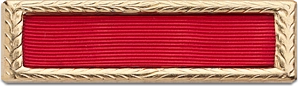
The Meritorious Unit Commendation ribbon worn to show award of the Meritorious Unit Commendation is 1 7/16 inches wide and 9/16 inch in height. The Scarlet ribbon is contained within a 1/16 inch wide Gold frame with laurel leaves. The previously issued emblem was a 1 5/8 inch gold, embroidered laurel wreath on a two-inch square Olive Drab cloth. The unit receiving the award must have shown devotion and superior performance of extremely complex tasks that set their unit above and beyond other units under similar circumstances with similar missions.
Prerequisites
The Army Meritorious Unit Commendation (MUC) shall be awarded only to Commissioned Officers and Chief Warrant Officers who have rendered distinguished meritorious service in a position of enormous responsibility whilst serving as an Officer. Awarded at every one (1) year time in service.
-
U.S. Army Ranger Tab
History
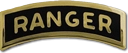
The Ranger tab is a service school military decoration of the United States Army signifying completion of the 61-day long Ranger School course in small-unit infantry combat tactics in woodland, mountain, and swamp operations. Those graduating from Ranger School are presented with the Ranger Tab, which is worn on the upper shoulder of the left sleeve of a military uniform. It is currently one of four permanent individual skill/marksmanship tabs authorized for wear by the U.S. Army.
Prerequisites
The US Army Ranger Tab shall be awarded to those who successfully complete Ranger School (ARMA).
-
French Fourragere

History
The 3rd Infantry Division was awarded the Fourragère aux couleurs de la Croix de Guerre for service to France in WW I.
Prerequisites
Awarded to those soldiers who have earned no less than 3 of the following skill badges/tabs.
- Ranger Tab
- Air Assault Badge
- Airborne Wings
- Expert Infantry Badge
-
3rd Infantry Division Combat Unit Patch
History
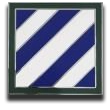
The 3rd Infantry Division Patch has been worn from 24 October 1918 to Present. The Third Division was organized in 1917 at Camp Greene, North Carolina and arrived in France in 1918. The three white stripes of the insignia are symbolical of the three major operations in which the division participated during World War I. The blue field symbolizes the loyalty of those who placed their lives on the altar of self-sacrifice in defense of the American ideals of liberty and democracy. This insignia was originally approved on 24 Oct 1918 for the 3rd Division, amended to correct the wording of the description on 11 Oct 1922 and redesignated with an amendment to include the border in the description for the 3rd Infantry Division on 15 May 1964.
Prerequisites
The 3rd Infantry Division Combat unit patch shall be awarded to soldiers who have been deployed on no less than 3 unit operations. Usually awarded with CIB Stage 3.
-
Pathfinder Badge
History
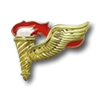
The Pathfinder Badge is a military badge of the United States Army awarded to soldiers who successfully complete the U.S. Army Pathfinder School at Fort Benning, Georgia. To be awarded the Pathfinder Badge, the soldier must complete Pathfinder instruction in advanced land navigation, advanced scouting, tactical air traffic control in the field, and the control of parachute operations; the badge is awarded on completing several examinations under field training exercise (FTX) conditions. Examinations include proficiency in sling load rigging and execution, planning and execution of helicopter landing zones (HLZ), air traffic control operations, aerial delivery of troops and supplies, and several others.
Prerequisites
The Pathfinder Badge is awarded to Soldiers who successfully complete the Pathfinder School in the 3rd Infantry Division.
-
Expert Infantryman Badge (EIB)

History
The Expert Infantryman Badge, or EIB, is a special skills badge of the United States Army. Although similar in name and appearance to the Combat Infantryman Badge (CIB), it is a completely different award: while the CIB is awarded to infantrymen for participation in ground combat, the EIB is presented for completion of a course of testing designed to demonstrate proficiency in infantry skills. The EIB was first created in October 1943. Currently, it is awarded to U.S. Army personnel who hold infantry or special forces military occupational specialties. To be awarded the EIB, the soldier must complete a number of prerequisites and pass a battery of graded tests on basic infantry skills.
Prerequisites
The Expert Infantryman Badge is awarded to Soldiers who successfully complete the Expert Infantryman Course in the 3rd Infantry Division.
-
Expert Field Medical Badge (EFMB)

History
The Expert Field Medical Badge (EFMB) is a United States Army decoration first created on June 18, 1965. This badge is the non-combat equivalent of the Combat Medical Badge (CMB) and is awarded to medical personnel of the US Military who successfully complete a set of qualification tests including both written and performance portions.
Prerequisites
The Expert Field Medical Badge shall be awarded to soldiers who successfully complete the Expert Field Medical Course in the 3rd Infantry Division.
-
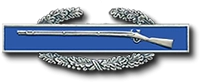
Combat Infantryman Badge (CIB)
History
The Combat Infantryman Badge (CIB) is a United States Army military award. The badge is awarded to infantrymen and Special Forces Soldiers in the rank of Colonel and below, who personally fought in active ground combat while assigned as members of either an infantry, Ranger or Special Forces unit, of brigade size or smaller, any time after 6 December 1941. The CIB and its non-combat contemporary, the Expert Infantryman Badge (EIB) were simultaneously created during World War II to enhance the morale and prestige of service in the infantry. Specifically, it recognizes the inherent sacrifices of all infantrymen, and that, in comparison to all other military occupational specialties, infantrymen face the greatest risk of being wounded or killed in action.
Prerequisites
The Combat Infantryman Badge shall be awarded to any soldier who has participated in active ground combat, no less than one time, and came out victorious during an official operational mission. Shall be awarded once per Campaign, up to 4 times. Subsequent awards are denoted by 1 silver star per additional award, attached to the top of the badge.
Tiers
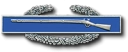 CIB1
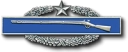 CIB2
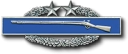 CIB3
 CIB4
-
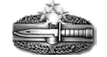
Combat Action Badge (CAB)
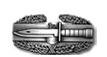
History
Since the Combat Infantryman Badge was introduced in 1943 followed by the Combat Medical Badge in 1945, other branches argued in favor of their own badges, but a War Department review board just after the war ruled these out. Unofficial combat badges for non-infantry soldiers were in some instances worn in violation of uniform regulations or included in personal award displays wherein the rifle and blue field of the CIB were replaced with the appropriate branch insignia and color. These unofficial combat badges began to appear shortly after the creation of the Combat Infantryman Badge and while the practice continued until the creation of an official non-infantry combat badge it never became widespread.
Prerequisites
The Combat Action Badge may be awarded to any soldier not eligible for the Combat Infantryman Badge (CIB) or Combat Medical Badge (CMB) after the date of September 18, 2001 performing duties in an area where hostile fire pay or imminent danger pay is authorized, who is personally present and actively engaging or being engaged by the enemy, and performing satisfactorily in accordance with the prescribed rules of engagement. Shall be awarded once per Campaign, up to 4 times. Subsequent awards are denoted by 1 silver star per additional award, attached to the top of the badge.
Tiers
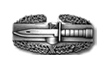 CAB1
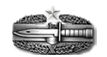 CAB2
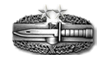 CAB3
 CAB4
-
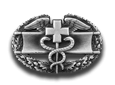
Combat Medical Badge (CMB)
History
Originally established as the Medical Badge, the Combat Medical Badge (CMB) was created by the War Department on 1 March 1945. It could be awarded to officers, warrant officers, and enlisted Soldier of the Medical Department assigned or attached to the medical detachment of infantry regiments, infantry battalions, and elements thereof designated as infantry in tables of organization or tables of organization and equipment. Its evolution stemmed from a requirement to recognize medical aid-men who shared the same hazards and hardships of ground combat on a daily basis with the infantry Soldier. Though established almost a year and a half after the Combat Infantry Badge (CIB), it could be awarded retroactively to 7 December 1941 to fully qualified personnel.
Prerequisites
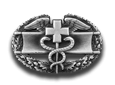
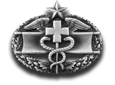
The Combat Medical Badge may be awarded to any soldier who having completed advanced medical training, participates in active combat during an operational mission, while assigned to or filling a dedicated medical role (CLS/Medic). Shall be awarded once per Campaign, up to 4 times. Subsequent awards are denoted by 1 silver star per additional award, attached to the top of the badge.
Tiers
 CMB1
 CMB2
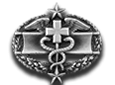 CMB3
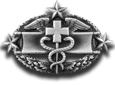 CMB4
-
Air Assault Badge
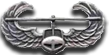
History
According to the United States Army Institute of Heraldry, "The Air Assault Badge was approved by the Chief of Staff, Army, on 18 January 1978, for Army-wide wear by individuals who successfully completed Air Assault training after 1 April 1974. The badge had previously been approved as the Airmobile Badge authorized for local wear by the Commander of the 101st Airborne Division, effective 1 April 1974." The division had been reorganized from parachute to airmobile in mid-1968 in Vietnam and designated the 101st Airborne Division (Airmobile). The parenthetical designation changed to Air Assault on 4 October 1974 and the name of the badge was likewise changed.
Prerequisites
The Air Assault Badge shall be awarded to soldiers who successfully complete Air Assault School.